
"caffeine tax"
300 article(s) found

Ethiopian coffee roasting
Following caf é (Wechat official account vdailycom) found that Beautiful Caf é opened a small shop of its own Ethiopia is the hometown of Arabica coffee, it is in the forests of the Kaffa region that you can see wild Arabica coffee. In Ethiopian, coffee is called Bun or Buna, and coffee beans (coffee bean) may be from Kaffa Bun

What are the functions of Arabica coffee
Following caf é (Wechat official account vdailycom) found that Beautiful Caf é opened a small shop of its own Ethiopia is the hometown of Arabica coffee, it is in the forests of the Kaffa region that you can see wild Arabica coffee. In Ethiopian, coffee is called Bun or Buna, and coffee beans (coffeebean) may be turned from Kaffa Bun

Talking about Coffee crisis from Black Coffee
Apart from oil, coffee is the most valuable legal commodity on earth. We will understand the impact of cheap coffee and popular marketing on coffee consumers and growers. Why did these coffee beans, which were originally as expensive as gold, end up with bad results? For more than a hundred years, the price of coffee has spiraled up and down in the rise and fall cycle. It has brought endless wealth to some people as well as to many people.

Characteristics of manor information of coffee bean varieties in Brazil
For the exchange of professional baristas, please follow the coffee in CarumondeMinas, the coffee workshop (Wechat official account cafe_style). This is by far the most conspicuous area in Brazil, often imagined as a farm in the mountainous regions of Central America and Guatemala, where it is harvested manually without machinery and dedicated to quality. Drink the coffee produced here, with a strong acid unlike Brazilian coffee

Description of Information Flavor of Brazilian Coffee Bean planting Historical Variety Manor
Communication of professional baristas Please pay attention to the coffee workshop (Wechat official account cafe_style) due to inherent conditions, the Brazilian government has invested a lot of resources to improve varieties and disease resistance since the 1930s. Among them, the results of bean research still affect the planting habits of Latin America as a whole. For example, they cultivated a natural variant of Bourbon, Yellow, from 1/1000000 opportunities in the 1930s.

The crisis of the coffee bean industry the most valuable legal commodity on earth
Apart from oil, coffee is the most valuable legal commodity on earth. We will understand the impact of cheap coffee and popular marketing on coffee consumers and growers. Why did these coffee beans, which were originally as expensive as gold, end up with bad results? For more than a hundred years, the price of coffee has spiraled up and down in the rise and fall cycle. It has brought endless wealth to some people as well as to many people.

The Coffee War in Kenya
The quality of Kenyan caffeine is widely praised in the global market, known as "black gold" in the industry, but the industry has long been monopolized by Western multinationals. To this end, Kenya wants to attract Chinese and other Asian investors to the market, thus intensifying the business game.
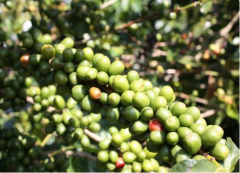
Introduction and description of the flavor and taste of Sidama coffee beans in Gedeo, Ethiopia
For the exchange of professional baristas, please pay attention to the coffee workshop (Wechat official account cafe_style) Ethiopia Sidamo-Gideo (Gedeo) sun beans Ethiopia is the country where coffee was first discovered and is the most important producer in terms of coffee quality and output. Coffee is mostly traditional Arabica species, with an annual output of about 350000 tons, more than 80% of which are exported to countries around the world.

Introduction to the characteristics of Flavor description treatment of Ethiopian Coffee Bean varieties
Ethiopian coffee taste variety Ethiopian coffee should be the only pollution-free green organic coffee in the world. Ethiopia still uses traditional planting methods to artificially care for coffee trees, and fertilizers are mainly deciduous leaves, withered grass and animal manure, replacing harmful pesticides and herbicides used on a large scale in other coffee-producing countries. Ethiopia now produces mocha-Mocha coffee

Introduction to the characteristics of fine coffee mocha coffee beans
Coffee beans from coffee hometown. Before the 6th century AD, Yemen was called Arabia, so coffee trees shipped from Yemen to other places were also called Arabian coffee trees. But the origin of these trees is Ethiopia, and the Dutch spread these coffee trees around the world. Dutch merchants sailing eastward around the Cape of good Hope (The Cape Of Good Hope)

Sunburn Yega Chuefei G1 Cochel Dumeso processing Plant Ethiopian Fine Coffee
Professional coffee knowledge exchange more coffee bean information please follow the coffee workshop (Wechat official account cafe_style) the national Ethiopian producing area Cochel area elevation 1850 2100 meters above sea level producers local area small farmers local area small farmer varieties Ethiopian native seed treatment plant du Meso sun treatment Yegashifi G1 Cochel Dumeso sun treatment

High-quality coffee mocha coffee bean treatment method
Coffee beans from coffee hometown. Before the 6th century AD, Yemen was called Arabia, so coffee trees shipped from Yemen to other places were also called Arabian coffee trees. But the origin of these trees is Ethiopia, and the Dutch spread these coffee trees around the world. Dutch merchants sailing eastward around the Cape of good Hope (The Cape Of Good Hope)

Fine coffee mocha coffee bean origin mocha coffee bean method
Coffee beans from coffee hometown. Before the 6th century AD, Yemen was called Arabia, so coffee trees shipped from Yemen to other places were also called Arabian coffee trees. But the origin of these trees is Ethiopia, and the Dutch spread these coffee trees around the world. Dutch merchants sailing eastward around the Cape of good Hope (The Cape Of Good Hope)

Fine coffee mocha coffee bean manor mocha coffee bean producing area
Coffee beans from coffee hometown. Before the 6th century AD, Yemen was called Arabia, so coffee trees shipped from Yemen to other places were also called Arabian coffee trees. But the origin of these trees is Ethiopia, and the Dutch spread these coffee trees around the world. Dutch merchants sailing eastward around the Cape of good Hope (The Cape Of Good Hope)

Introduction and brewing methods of coffee with national characteristics
Following Caffeine Review (Wechat official account vdailycom) found that Caf é Beautiful Cafe opened a small shop of its own. Coffee is a wonderful and aromatic source of caffeine, the world's most popular addictive ingredient, and its spread has never stopped since it spread from Ethiopia in the 15th century. In the Arab world, coffee is a substitute for wine, which leads to the rise of cafe culture.

The difference between Harald Coffee and Yegashefi Coffee, the Best Coffee Variety in Ethiopia
Professional coffee knowledge exchange more coffee bean information please follow the coffee workshop (Wechat official account cafe_style) Ethiopia is the hometown of Arabica coffee, it is in the forests of the Kaffa region that you can see wild Arabica coffee. In Ethiopian, coffee is called Bun or Buna, and coffee beans (coffeebean) may be from Ka

Description of the flavor characteristics of Ethiopian coffee beans the difference between Essex plus Xuefei and Guji Coffee
For more information on coffee beans, please follow the coffee workshop (Wechat official account cafe_style) Ethiopia is currently the largest coffee producer in Africa, but only 60% of the coffee beans are exported, and the rest are used in various forms of ceremonies, such as weddings.

How many tricks are hidden in a cup of coffee
In the rules of the World Barista Championships, the traditional cappuccino is defined as "five to six ounces of drinks (Five-to-six-ounce beverage)". In fact, Starbucks 8-ounce cappuccinos are basically made from the same dose of coffee (Espresso) as 12-ounce cappuccinos, which means that "small cups" taste purer and better. If you buy

A brief introduction to the description of the flavor and aroma characteristics of the boutique coffee beans full of softness.
The highest grades of Sidamo (Yirgacheffe, Sidamo) are Grade 2 and Grade 3 (G2 and G3), and most of the sun-processed coffees in eastern Ethiopia are Grade 4 or Grade 5 (G4 and G5). In many cases, level 4 coffee is marked as level 5 in order to reduce taxes. At present, the grading is not uniform and messy, because there are primary and secondary sun processing (Grand G).

No one grows coffee anymore. What happened to Puerto Rico, once the sixth largest coffee producer in the world?
Weixin Official Accounts cafe_style ) Puerto Rico, a US territory that has lost 400,000 residents since 2000, is a picturesque Midwestern mountain town known for its coffee, ice cream and 19th-century rebel history, but now population exodus has become a negative feature of the ancient city. Since the 2000 census